Ticket to Ride: 1901
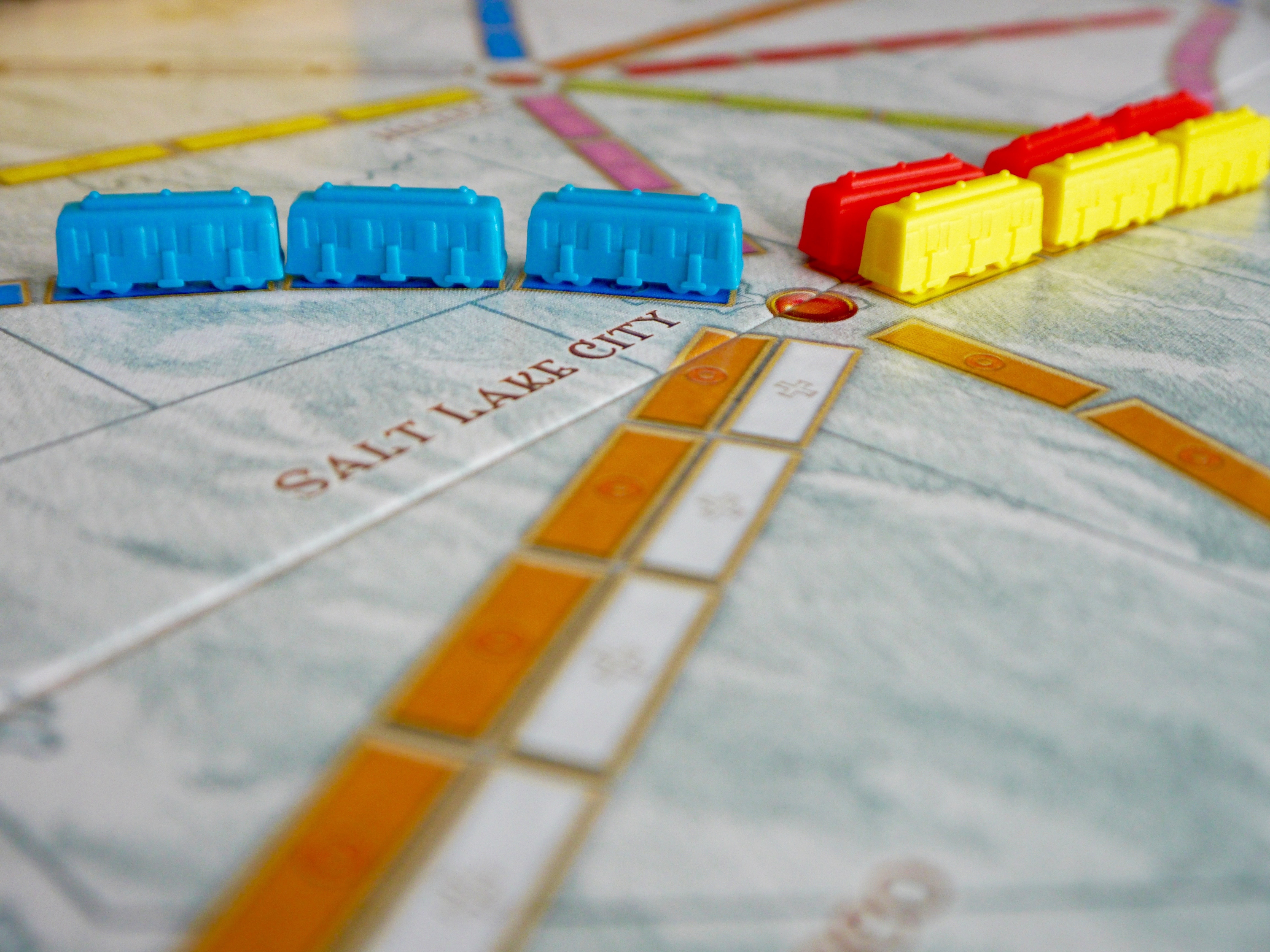
Spoiler warning. This article is about the 1901 game that unlocks once you’ve completed the Legends of the West campaign. If you haven’t played through the campaign yet, stop here, go play it (it’s absolutely brilliant), and come back once you’re done. You won’t regret it.
So you’ve done it. You’ve ridden the rails, built your empire across the American West, made decisions you regretted, celebrated unlikely victories, and seen the campaign through to its conclusion. And now the board in front of you is something entirely your own. Every sticker, every permanent route, every city connection - that’s the product of your group’s choices across all those chapters.
And then the box reveals one more thing: 1901.
What is 1901?
1901 is the standalone game that unlocks after completing the Legends of the West campaign. It’s not a legacy game. It’s not a chapter. It’s a full, replayable Ticket to Ride experience designed specifically for the evolved board you’ve built together.
The map you’ve created through the campaign isn’t just a memento - it becomes the playing field for a proper competitive game, with all the route modifications, cities, and connections your group permanently added along the way. No two groups will have quite the same board, which makes 1901 feel genuinely personal in a way that standard Ticket to Ride never quite can.
The employee system from the campaign carries over too. At the start of each game, players draft employees who bring special abilities that persist through the game, adding a layer of strategy that goes well beyond the standard Ticket to Ride formula. The combination of a unique map and asymmetric employee powers makes for a really interesting game - familiar enough if you know Ticket to Ride, but with enough new wrinkles to keep it fresh.
The Score Sheet
We put together a score sheet to keep track of everything during a 1901 game. Download it, print as many copies as you need, and keep a stack next to the box.
Download the 1901 Score Sheet (PDF) - or grab the Word version if you want to customise it.
It tracks up to five players across four games on a single sheet. For each game you record your share holdings across all six railroads (New York Central, Baltimore & Ohio, New Haven & Hartford, Erie Railroad, Pennsylvania Railroad, and Reeve’s Rails) with a share bonus subtotal, then coins in hand, trains remaining, and tickets completed. There’s also a handy reference at the bottom for the trains-left scoring scale and the share rank bonuses (1st = 20pts down to 4th = 5pts, with ties handled cleanly). Print one off and keep a stack next to the box.
Our House Rules
We’ve played a few rounds of 1901 now and settled into some house rules that we think improve the experience. Take them or leave them.
The President
The player who finished last in the previous game gets to be President.
Being President means you also get first pick of employees - you choose one additional before anyone else, outside of the normal draft order. Then the draft continues around the table as normal, with everyone else picking in whatever order was decided.
The idea here is twofold: it’s a catch-up mechanism that gives a returning “last place” player a meaningful advantage without being game-breaking, and it creates a nice narrative continuity between games. You lost the last one, but you’re running the railroad this time. Go prove something.
Deciding Turn Order
Once the employee draft is done, we settle turn order with a round of rock, paper, scissors. Losers eliminate in sequence until there’s a first player. It’s chaotic, it’s quick, and it avoids the usual boring “youngest player goes first” default.
We find this works particularly well because it adds a tiny moment of silliness right before the game proper starts, which is a good vibe reset after what can sometimes be an intense employee draft.
Expansion Ideas
The Legends of the West map is genuinely one of the best Ticket to Ride maps out there. The scale of the American West suits the game beautifully, and the campaign does a wonderful job of making the map feel earned. But 1901 does expose one honest limitation: the routes are long. Very long. Almost exclusively long, in fact.
That’s partly a feature - the West is vast, and the game captures that feeling well. But it does mean that shorter strategic connections are underrepresented, and certain areas of the map (particularly the Pacific coastline) feel a bit sparse compared to the interior routes.
So we’ve been thinking about what expansion content could look like for 1901. Here are some ideas we’ve been kicking around.
West Coast Connections
The Pacific coast from San Diego up through Los Angeles, San Francisco, Portland, and Seattle is almost entirely absent from meaningful short-to-medium route options. A West Coast expansion could add a cluster of shorter coastal routes, opening up a more rapid, lower-cost path along the Pacific that competes with the long transcontinental crossings. New destination tickets built around coastal city pairs would let players pursue a different kind of game - tight, efficient, western-focused rather than east-west spanning.
The Mining Routes
The Rockies and Sierra Nevada are enormous on this map but relatively underserved by short connective routes. A Mountain Mining expansion could add routes through mining towns and mountain passes - shorter, harder-to-claim routes through difficult terrain. Think routes worth 1-3 points that let you stitch together paths through the mountains without committing to a full cross-country haul. Thematically it fits perfectly: the 1901 setting is right in the middle of the Western mining era.
River Routes
The Columbia, Colorado, and Snake rivers carved the geography of the West, and the map doesn’t really reflect them as transport corridors. A River Routes expansion could add a new route type - perhaps requiring a different colour card or a wild card mechanic - that follows the rivers and allows faster, cheaper connections through otherwise disconnected terrain. Destination tickets could reward players for completing routes that follow the river corridors.
National Parks
By 1901, Yellowstone, Yosemite, and Sequoia had all been established as national parks. A National Parks expansion could add these as special destination nodes on the map - not cities, but named landmark stops that can only be reached via specific adjacent routes. Completing a ticket that routes through a National Park could score bonus points, rewarding players who plan their networks around the geography rather than just the cities.
I’d love to know if other groups have developed their own house rules or expansion ideas after finishing the campaign. The 1901 game feels like it has a lot of room to grow, and the map really does deserve more plays than it tends to get once the campaign box gets put back on the shelf.